Notes from a Development Engineer: “What Working on the XFO 1.8 GHz Upgrade Solution Has Taught Me”
Share


Our products and solutions are a big part of our story, but they’re not the full picture. The success of our products rely on the quality of work, capacities, and cohesion of the teams developing them. So what makes a good team a good team? What ingredients are needed to make projects rewarding experiences?
Technetix Development Engineer, Kristian Dean, tells us what he learned from working on the development of our groundbreaking XFO faceplate-only swap multitap; a solution that went on to win multiple awards, and changed the upgrade game for a major North American Tier 1 operator.
“During my time at Technetix, I’ve had the opportunity to get involved in the design and development of a number of innovations and products that solve real-world challenges. Our aim is to enhance the services our customers provide their customers, so we need to consider what both prioritize and expect.
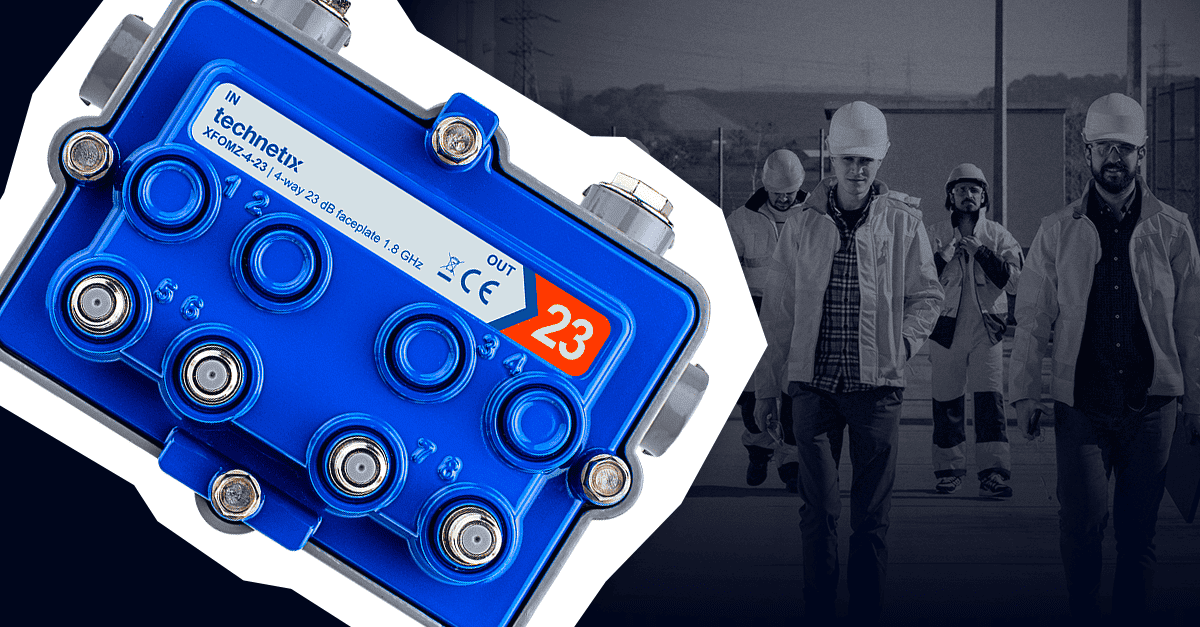
One recent project stands out to me: the XFO multitap upgrade. This task required us to integrate cutting-edge tap technology into legacy, third party housings. These housings had been designed over 30 years ago so it was huge challenge. But one that taught me a lot.

These are three key lessons I took away from the experience:
1. Communication is everything: In complex, cross-functional projects, communication is essential. While nothing can happen without a clear, well-defined brief, there’s more to it than that. The teams working on XFO weren’t just cross-functional: they were based in different countries so we had to account for time zones and varying pressures.
It was crucial we maintained open, continuous dialogue so that everyone was always up to speed. It ensured alignment and encouraged innovation. In our line of work, things that can seem insignificant at the time can end up being the thing that determines a project’s success. And those incidental conversations with colleagues? They’re often the vehicles that carry the best ideas, and the moments when inspiration shows up.
2. Challenge the status quo: Just because something’s always been done a certain way doesn’t mean it’s the best way. The XFO upgrade project reminded me how powerful it can be to ask why? Questioning even the smallest design decisions paved the way to breakthroughs that significantly improved the final XFO multitap product, and resulted in a number of related patents being published.
Our team interrogated the need for full tap replacements for network upgrades. With the existing backbox of the housing and feeder cable already settled in situ, it seemed unresourceful to work with the ‘rip-out-and-replace’ method. Besides being cost-, time-and labor-intensive for operators and network owners, this full replacement process affected end user service with interference and downtime. By challenging this status quo, our faceplate-only solution was born.
3. Teamwork makes the difference: Even the most skilled individuals can’t outperform a strong team. Building on diverse perspectives, encouraging collaboration, and supporting one another was key to delivering our XFO solution.
Everyone has different skills and experiences to bring to the table, and it was the mix of viewpoints, ideas, knowledge and diverse thought processes that propelled XFO’s development along. One of the most gratifying feelings has to be cohesive teamwork.
The XFO project was a really rewarding journey which resulted in the industry’s first ever faceplate-only 1.8 GHz multitap upgrade for ESD networks. The success of the collaboration across our teams – from engineering to sales – was without doubt down to the brilliant teamwork, clear communication and the chops we all showed in asking questions and challenging conventions.
If you want to learn more about the XFO multitap range, check it out here.
Kristian has been part of Technetix’ R&D team for nine years, specializing in electrical and mechanical disciplines. Outside of work, you’ll find him doing his best to make it look like he knows what he’s doing on the rugby pitch.